Science
Open access is good for us
A paper published in today’s Science Magazine1 shows that citation of scientific papers increases as journals switch to allow free and unrestrictive access of their content online. This seemingly intuitive result becomes interesting when paired with the observation that open access has a great positive impact in developing world participation in global science.
- Evan, JA and J. Reimer. Open Access and Global Participation in Science. Science 20 February 2009: Vol. 323. no. 5917, p. 1025 | DOI: 10.1126/science.1154562 ↩
Early call from Science
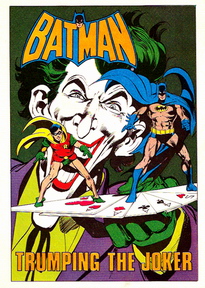 My brother had the courtesy of regressing me to a time in our childhood that may be partially responsible for our choice to become professional scientists. You see, our parents had bought us a Batman comic book that came with an audio cassette. Playing the audio cassette, one could hear the story in voice acting and special effects while following the artwork. A bell ring would indicate when to turn the page.
In the story, “Trumping the Joker”, Batman and sidekick Robin chase after the Joker that had just escaped from Arkham Asylum and stolen a famous Picasso from the Gotham City Museum of Fine Arts. Great story. After apprehending the Joker and saving the Picasso the story ends with a short dialog between our superheroes that includes a profound, final reflection by Batman.
Happy bicentenary Darwin
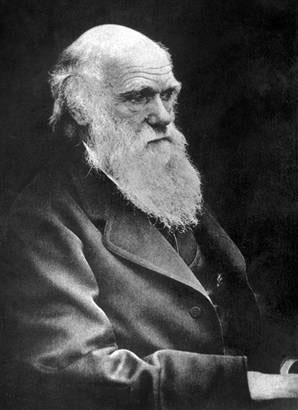
Charles Robert Darwin was born 200 years ago today.
As celebrations start around the globe, I just want to recommend a wonderfully written essay on Darwin by Aussie philosopher of science John S. Wilkins:
Not Saint Darwin [pdf]
It is a piece on why do we celebrate Darwin today that provides food for thought for the rest of Darwin’s year.
Read–write culture
The Books and Arts section in this week’s Nature has a review of the new book by Lawrence Lessig called Remix: Making Art and Commerce Thrive in the Hybrid Economy. Lessig is founder of Creative Commons, from which Science Commons recently spawned (see my earlier post). › Continue reading
The worst hangover I ever had
I did my undergraduate studies in Biology at UNAM in Mexico City. While this institution holds the best science libraries in the country, there was always the odd paper I couldn’t find, especially when it came to insect taxonomy with its plethora of obscure journals. Add to this that electronic journals had yet to come into existence (it’s not that I am old, they are really a very recent phenomenon).
Back then, getting papers in the subject of one’s interest consisted in meticulously thumbing through the heavy telephone books for animals called Zoological Records*, writing down some potentially useful references, and filling a petition for copies at a special place in campus that dealt with international inter-library loans. After that, you only had to wait a couple of weeks to get photocopies of some papers that were not quite what you were looking for. It felt like I was doing some serious research nevertheless. › Continue reading
Science Commons
You may have seen many websites making their content freely available under a version of the Creative Commons License (the taxonomic data, images and publications stored in antbase.org and antweb.org are good examples). Creative Commons has now launched a special project specific for the enhancement of science through the web called Science Commons: › Continue reading
